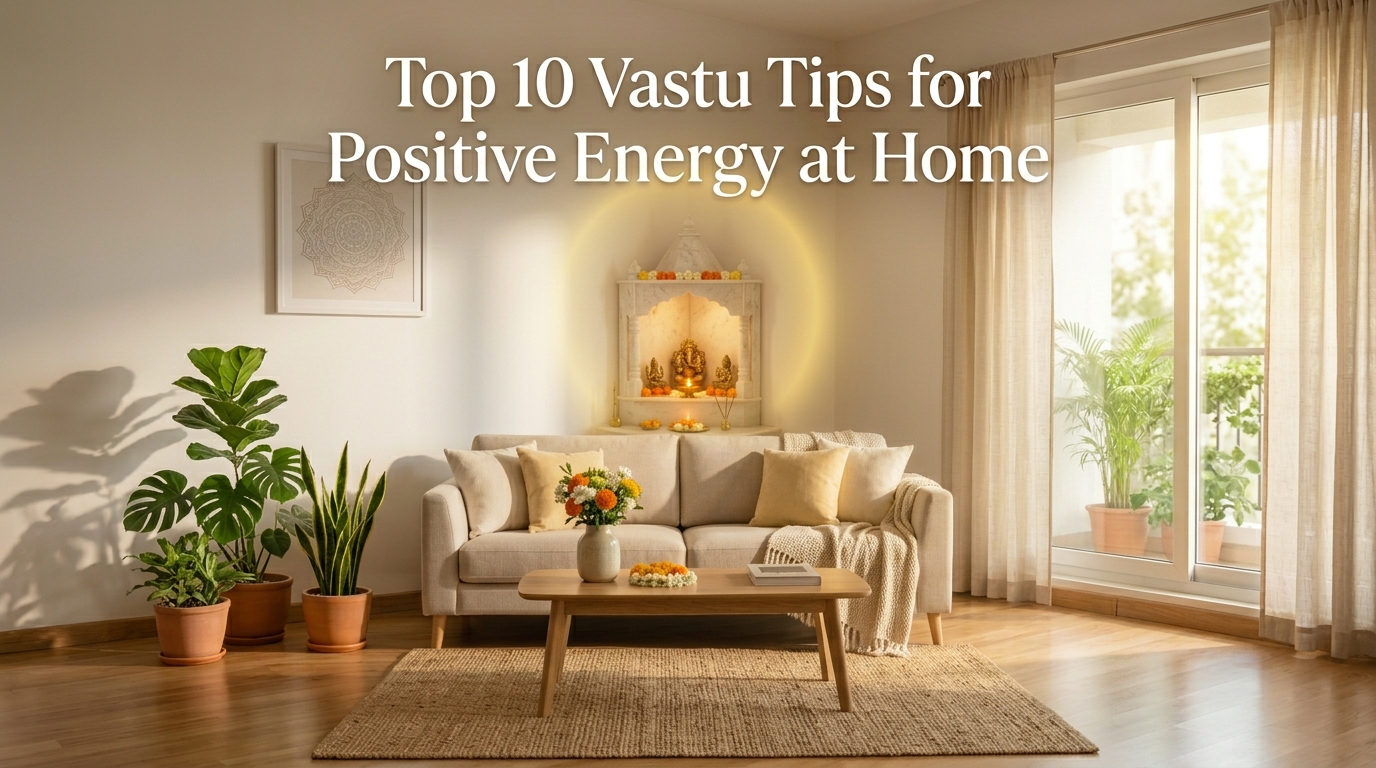
Ancient Indian architecture meets modern living — simple adjustments that invite harmony, prosperity, and peace into every corner of your home.
Vastu Shastra — the ancient Indian science of architecture — teaches that the spaces we inhabit are alive with energy. When a home is arranged in harmony with the five elements (Pancha Bhuta) and the eight cardinal directions, it becomes a sanctuary where health flourishes, relationships deepen, and abundance flows naturally. You don’t need to rebuild your home to benefit. Here are ten time-tested Vastu tips you can act on today.
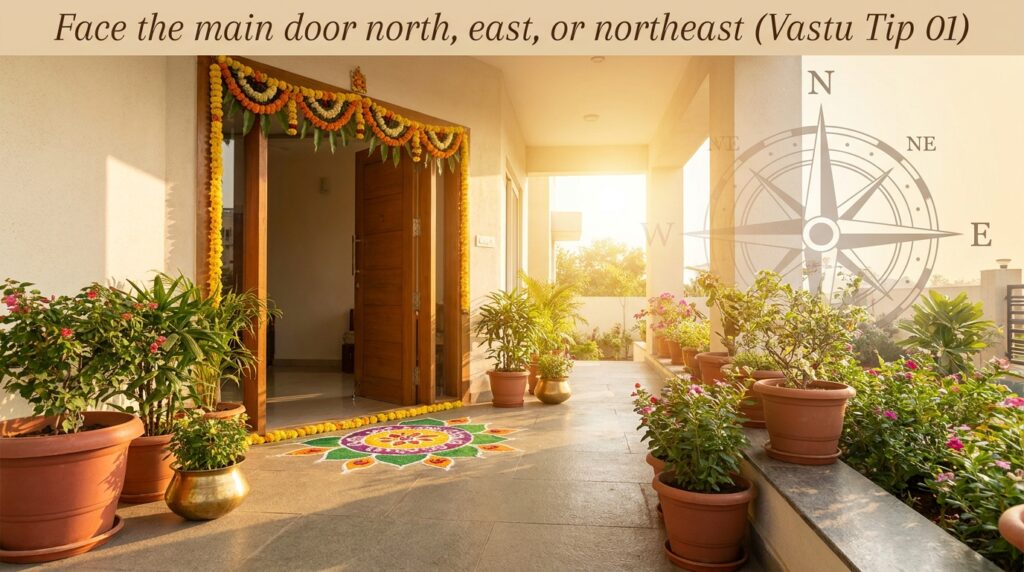
01:Face the main door north, east, or northeast(vastu tips)
The entrance is your home’s energy gateway. North is governed by Kuber (the lord of wealth), while the east channels the life-giving energy of the rising sun. A northeast-facing door is considered the most auspicious of all. Ensure the entrance is well-lit, clutter-free, and welcoming — no shoes or garbage bins crowding the doorstep.
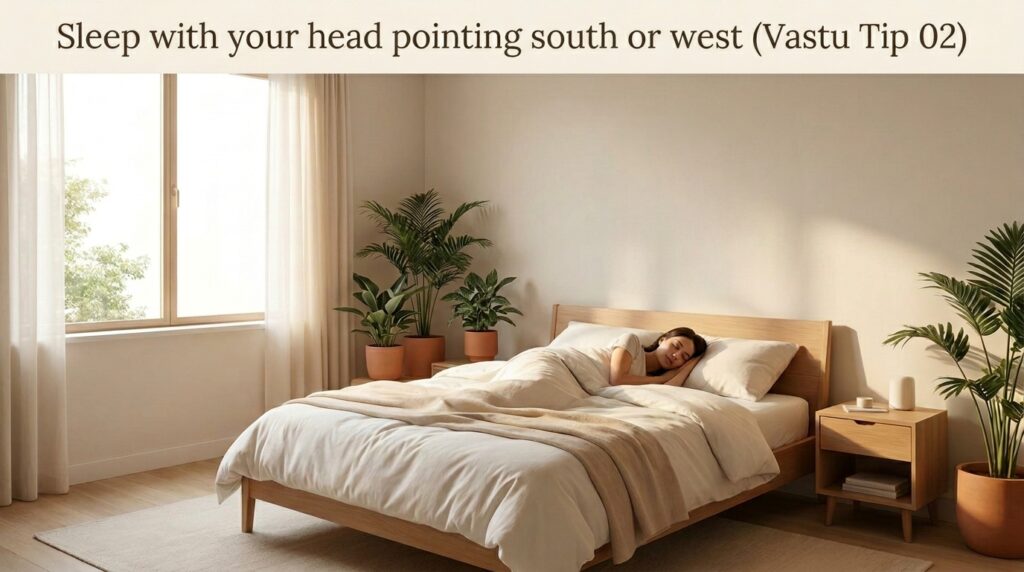
02:Sleep with your head pointing south or west(vastu tips)
According to Vastu, the earth’s magnetic field flows from south to north. Aligning your body with this field — head south or west — promotes deeper, more restful sleep and reduces fatigue. Avoid sleeping with your head pointing north, as it is said to disturb the body’s natural electromagnetic alignment and lead to restless nights.
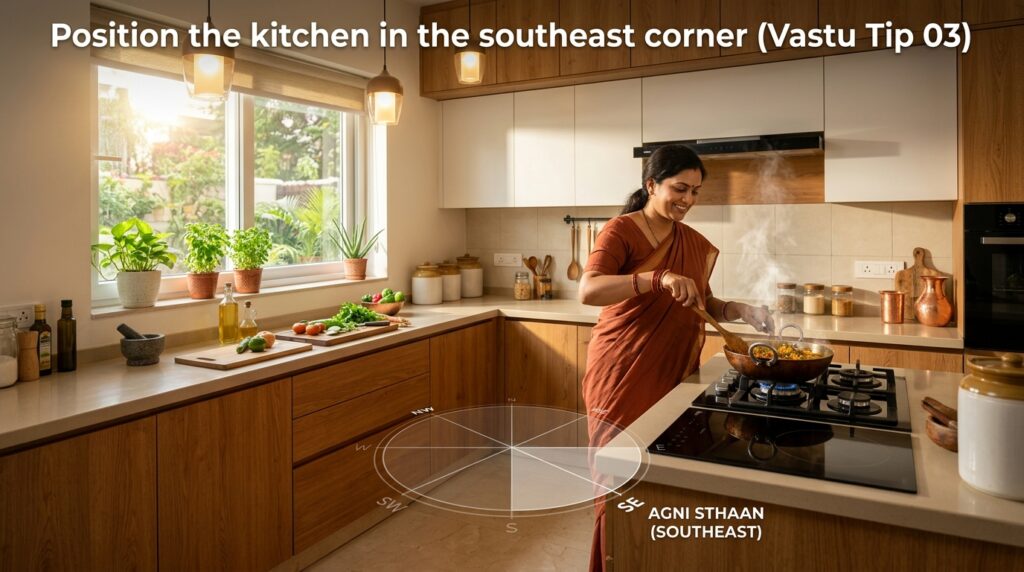
03:Position the kitchen in the southeast corner(vastu tips)
Fire (Agni) is the presiding element of the kitchen, and the southeast — ruled by Agni, the fire deity — is its natural home. Cook facing east whenever possible. Avoid placing the kitchen in the northeast (the zone of water) or directly adjacent to the bathroom, as these arrangements create elemental conflicts that Vastu links to health disruptions and financial strain.
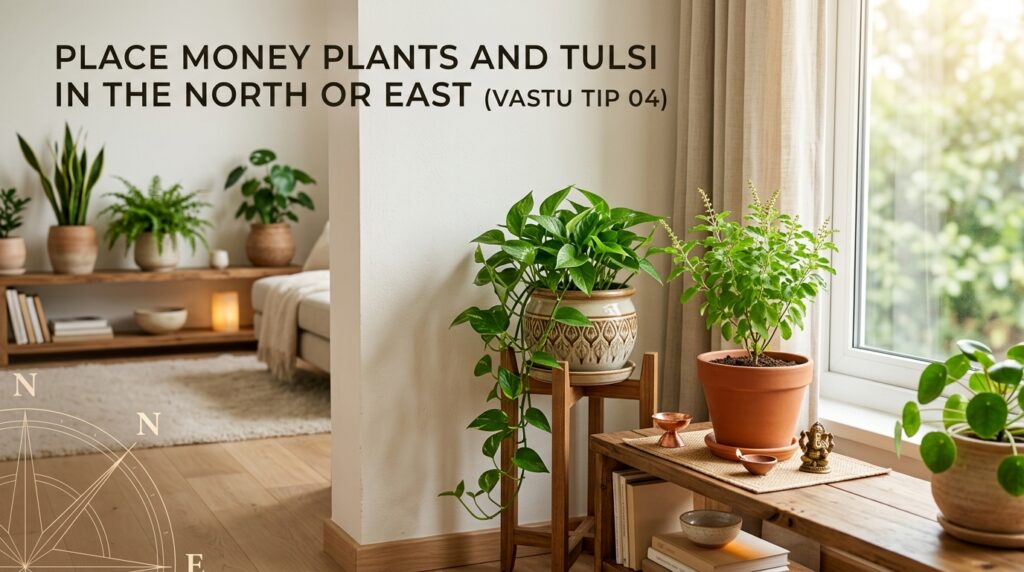
04:Place money plants and tulsi in the north or east
Healthy, thriving indoor plants signify positive prana (life force). The money plant (Epipremnum aureum) is especially auspicious when kept in the north or southeast. Tulsi (holy basil) belongs in the northeast or east courtyard — it purifies the air and is considered sacred in Vedic tradition. Always remove dead or wilting plants immediately, as they attract stagnant energy.
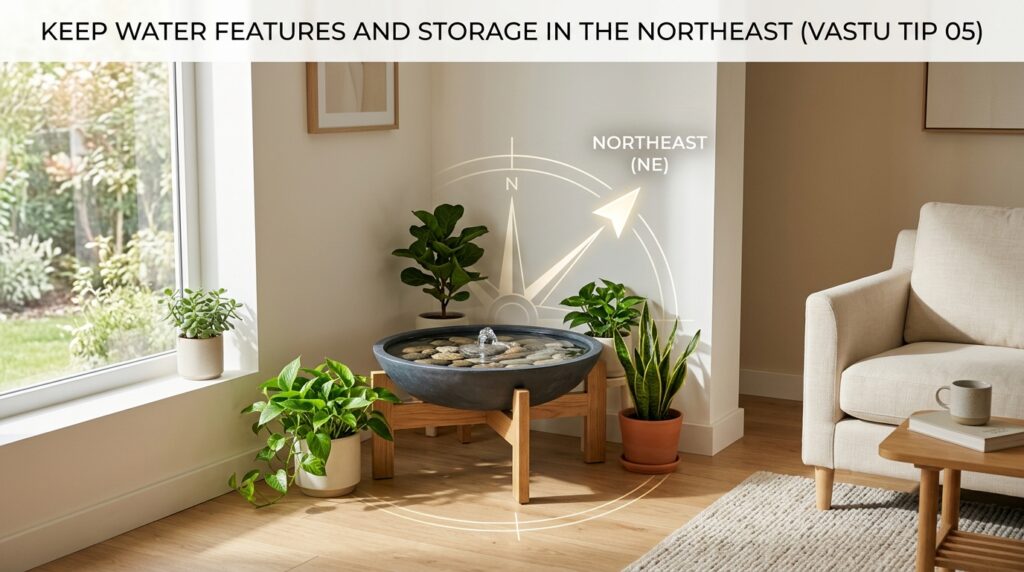
05:Keep water features and storage in the northeast
Water is associated with the northeast (Ishaan) corner, which Vastu considers the most spiritually potent zone of the home. An aquarium, fountain, or water feature placed here energises the space beautifully. Ensure taps and water tanks are leak-free throughout the home — dripping taps are said to symbolise, and even precipitate, financial losses.
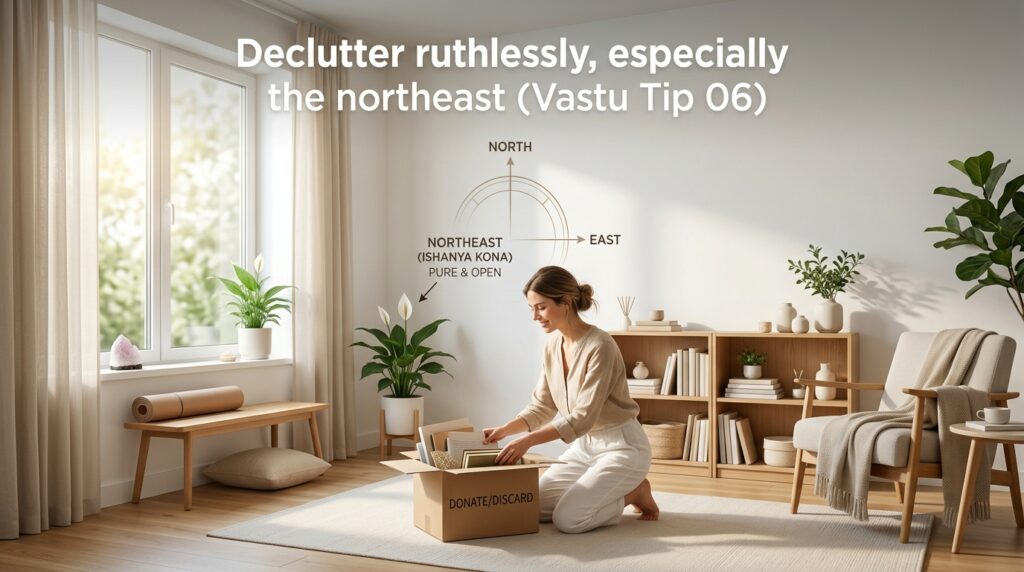
06:Declutter ruthlessly, especially the northeast
Clutter is one of the most direct Vastu violations. Accumulated objects block the free flow of energy just as furniture blocks a corridor. The northeast corner in particular must remain light and open — it serves as the home’s spiritual and intellectual hub. Do a seasonal purge; donate what you don’t use. An uncluttered space allows fresh energy — and fresh opportunities — to enter freely.
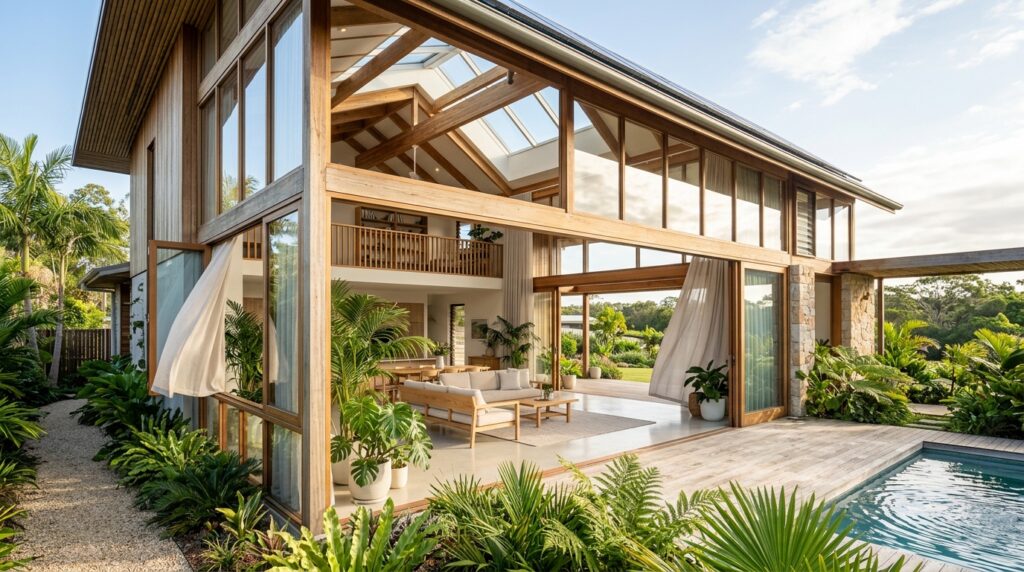
07:Maximise natural light and cross-ventilation
Vastu places immense value on Surya (solar energy) and Vayu (wind). Large east-facing windows draw the morning sun deep into the home, elevating mood and immunity. Ensure there is adequate cross-ventilation to keep air moving — stagnant indoor air carries stagnant prana. Use sheer curtains rather than heavy drapes in the east and north to keep these directions radiant and open.
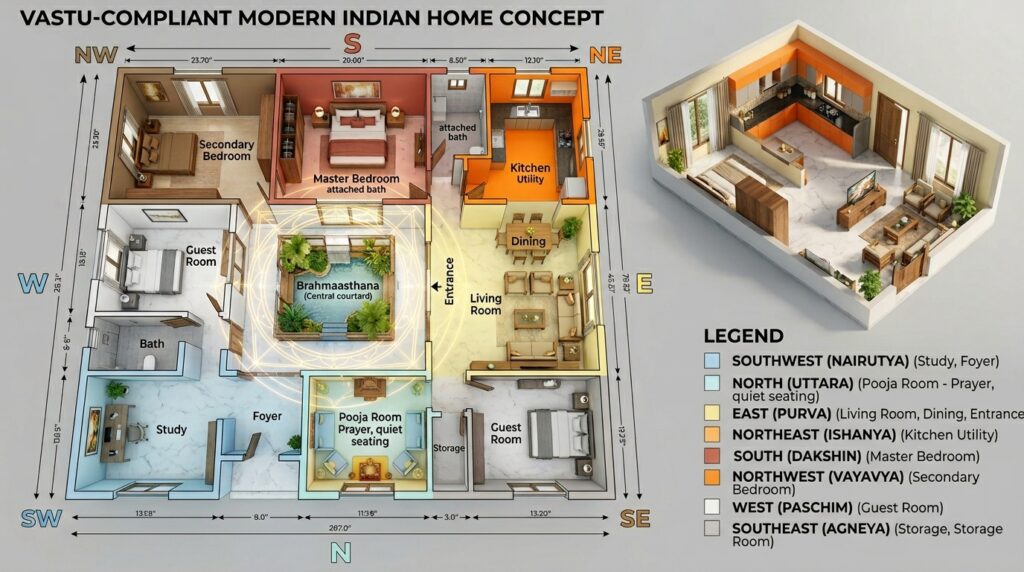
08:Choose room colours aligned with their directions according to vastu
Each direction has a ruling element and an associated colour palette. The north (water) thrives with blues and greens; the east (wood) suits light yellows and greens; the south (fire) works well with earthy reds and oranges; the west (metal) suits whites and pastels. Avoid dark, heavy colours in small rooms or in the northeast and east, where lightness and openness are prized.
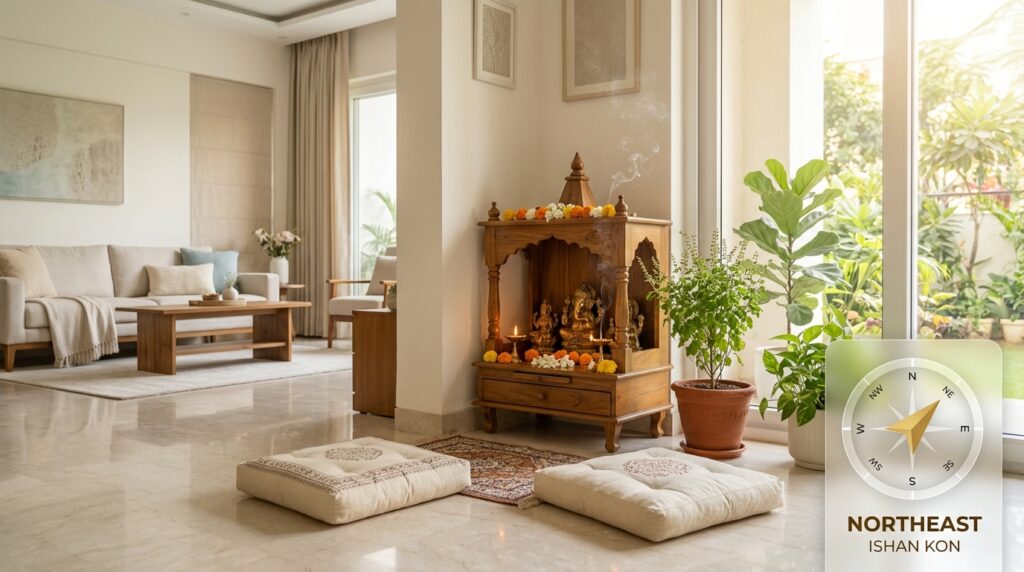
09:Set the prayer or meditation corner in the northeast
The northeast, or Ishaan Kona, is the zone of divine energy and clarity of mind — the ideal location for a pooja room or meditation corner. Keep this space immaculately clean and never store heavy furniture or toiletries here. Light a lamp or incense each morning to activate the space. Even a small, dedicated altar in this corner brings a sense of spiritual grounding to the entire home.
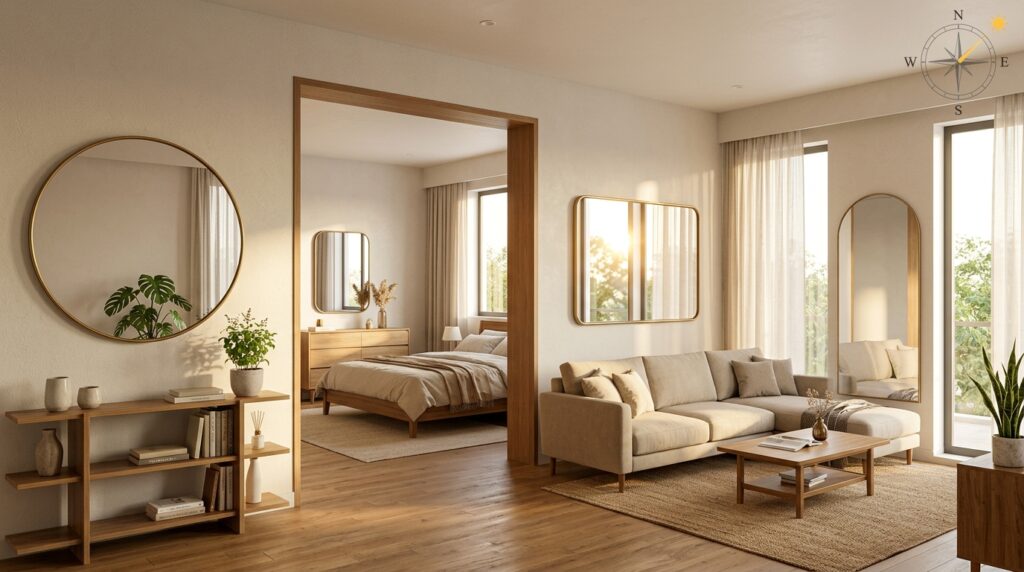
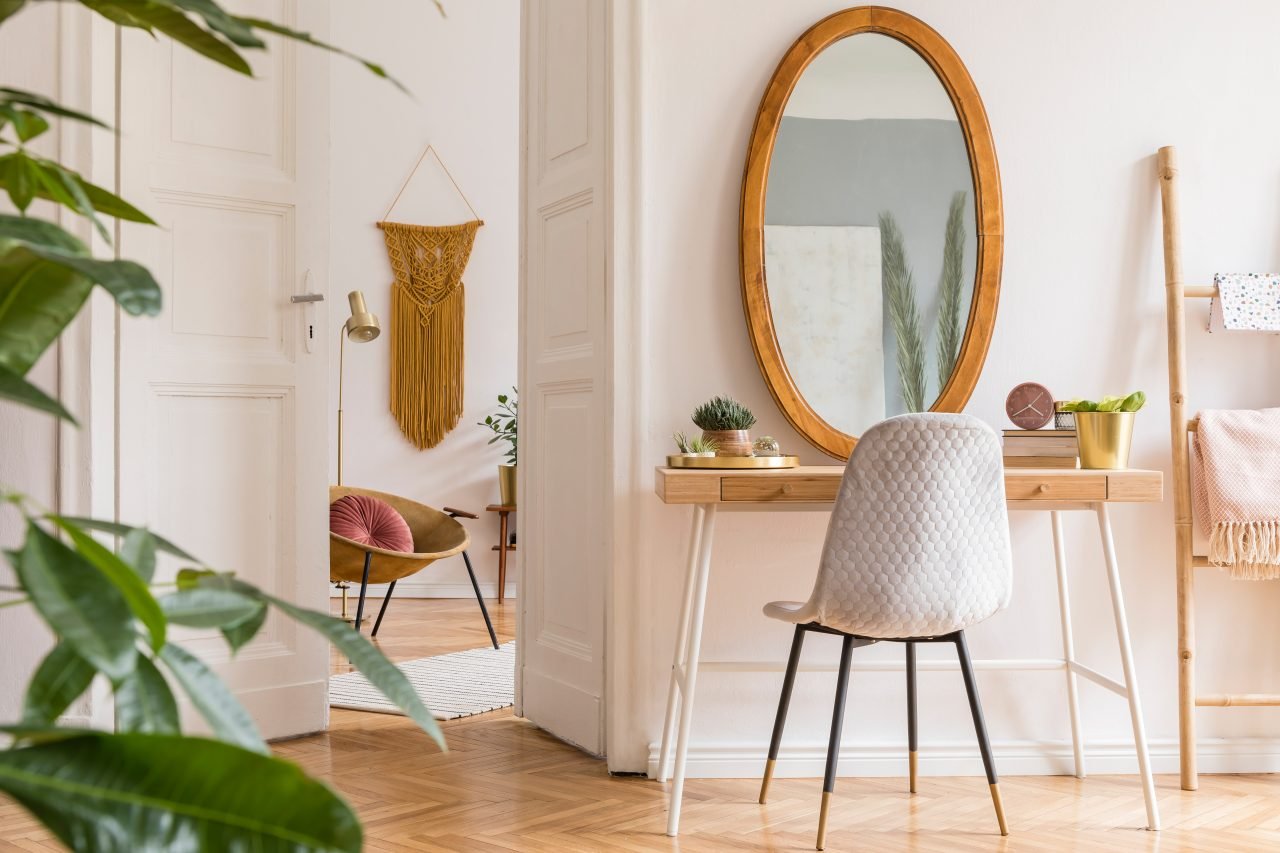
10:Place mirrors on the north or east walls only
Mirrors amplify whatever energy they reflect. On a north or east wall, they double the beneficial solar and wealth energy flowing into the home. Avoid mirrors directly facing the bed — they are believed to disturb sleep and amplify anxieties. Never place a mirror on the south wall, as it is said to reflect and magnify conflict and health challenges. Keep mirrors spotlessly clean and crack-free at all times.
“A home built on Vastu principles is not merely a structure — it is a living organism breathing in rhythm with the cosmos, nurturing everyone who dwells within it.”
— Gauravsriaggarwal